Should I Put a Title Before Resume Bullet Points?
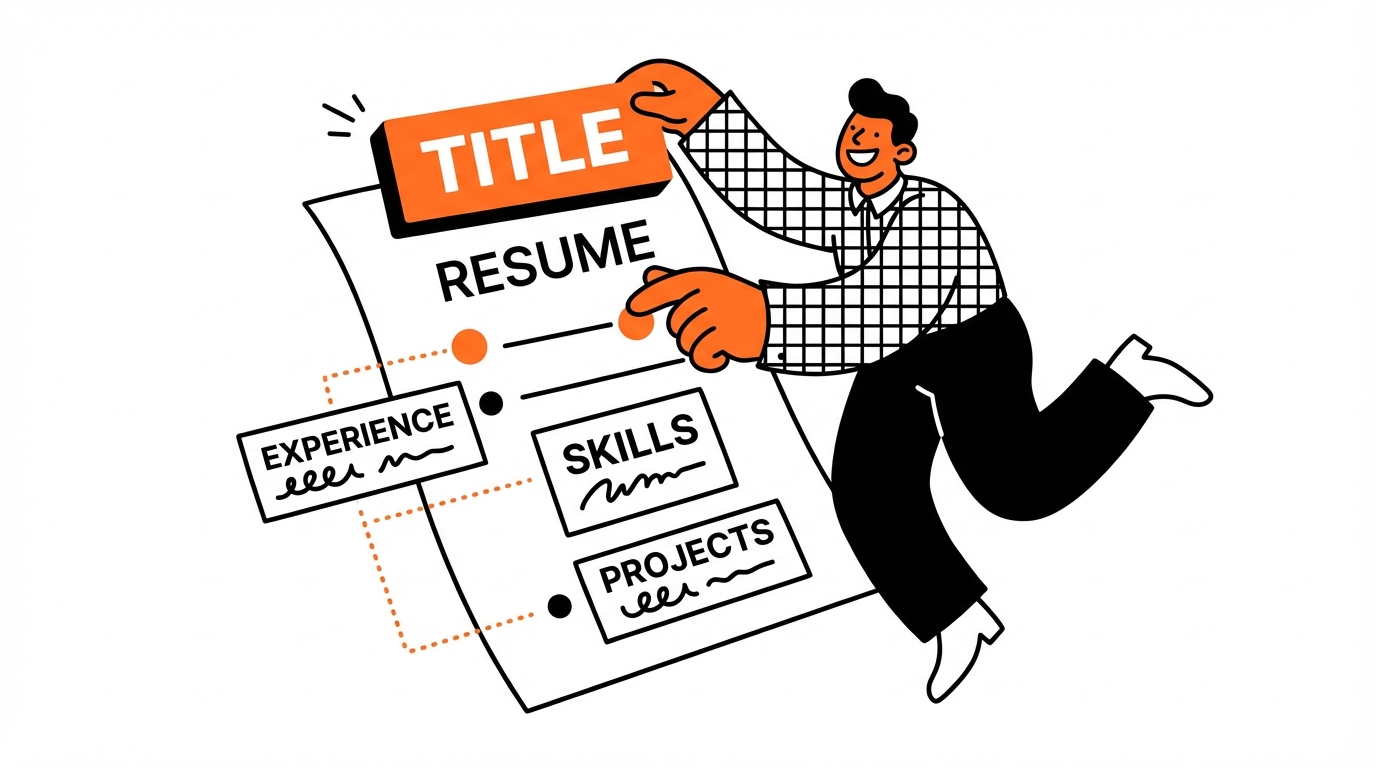
If you're asking "should i put a title before resume bullet points?" you're probably trying to make your experience easier to scan and less likely to get mangled by an ATS. Good instincts. The short version: yes, you should have a clear "title line" before your bullet points—but it should usually be your job title + company + dates, not a mini headline before every single bullet.
Quick answer (what to do in most resumes)
Do this:
- Put a job title line before your bullets:
Job Title — Company | Dates (Location)so humans + ATS can understand the entry instantly. Use our ATS resume template. - Use bullet points for achievements and impact, not just duties. Avoid these common resume mistakes.
- If you want an extra label, use one simple label (once per role), like
Selected achievements:—not a new "title" before each bullet.
Avoid this:
- Don't add a "title" like
Project:/Result:/Impact:before every bullet unless the job post specifically pushes you that way—it often adds clutter and can confuse ATS parsing. - Don't invent creative section headings—ATS + recruiters expect standard ones.
What counts as a "title" before bullet points? (People mean different things)
When people say "title before resume bullet points," they usually mean one of these:
- A role header (recommended):
Senior Analyst — Company | 2023–2026then bullet points. - A section header (recommended):
Experience,Projects,Education,Skillsthen entries and bullets. - A mini label above bullets (sometimes OK):
Key achievements:orHighlights:then bullets. - A "headline" before each bullet (usually not worth it):
Automation:bullet…Reporting:bullet…Stakeholder management:bullet…
The ATS-friendly format that works almost everywhere (copy/paste template)
Here's a clean template you can steal. It's readable for humans and simple for ATS parsing.
JOB TITLE — Company Name, City (or Remote) | MM YYYY – MM YYYY
(Optional) Tools/Tech: Tool A, Tool B, Method C

• Achievement or impact + number + context
• Achievement or impact + number + context
• Achievement or impact + number + context
Why this format is so safe
- ATS systems parse documents and try to detect structure (titles, dates, companies, bullets). Clear role headers make that easier.
- Recruiters skim fast; a clear title line gives them the "what role is this?" answer immediately.
When adding a label before the bullets helps (and what to call it)
A small label can help when it reduces thinking, not when it adds decoration. Good times to add a label:
- You had a long role and want to frame the bullets as outcomes:
Selected achievements: - You're switching careers and want the recruiter to see relevance quickly:
Relevant highlights: - You're in a results-heavy role (sales, growth, ops) and the label helps set expectations:
Impact:
Keep labels plain-text, short, and consistent (don't rotate between 12 different synonyms).
When "titles before bullets" can hurt (common formatting traps)
These are the patterns that look fancy… but often backfire:
- Micro-headlines for every bullet (adds clutter and can dilute keywords that matter).
- Non-standard section headings like
My Journey,What I've Been Up To,Career Story—ATS and humans expect standard labels. - Heavy formatting (tables, multi-columns, text boxes) that can break parsing.
If you're unsure, run your resume through an ATS check before applying.
Good vs bad examples (so you can spot it instantly)
Example A: Good (clean title line + bullets)
Operations Manager — BrightShip Logistics, Warsaw | 2022 – 2026
Selected achievements:
• Reduced order processing time by 23% by redesigning picking workflow and QA checks
• Built KPI dashboard used by 4 teams; improved SLA visibility and weekly reporting cadence
• Led cross-functional rollout of new WMS process across 2 warehouses
Why it works:
- The title line gives context; bullets do the selling.
- The label is used once and stays out of the way.
Example B: Usually bad (a "title" before each bullet)
Operations Manager — BrightShip Logistics | 2022 – 2026
Automation: • Did automation stuff
Reporting: • Made reports
Quality: • Improved quality
Why it can underperform:
- Adds extra words without adding clarity or keywords from the job description.
- The bullets are vague—and vague bullets are one of the biggest resume killers.
A simple decision rule you can follow
Use this quick rule of thumb:
- If you mean job title/company/dates → Yes, always put that before bullets.
- If you mean a one-time label like
Highlights:→ Optional, only if it improves scanning. - If you mean a mini title before every bullet → Usually no. (Only use it if your industry expects it and your bullets stay specific and keyword-aligned.)
Make your bullet points match the job (this is where most people lose)
Even perfect formatting won't help if your bullets don't match what the employer is hiring for. The easiest win is to tailor your wording and keywords to the job description—without turning your resume into a keyword soup.
ApplyMate is built for exactly that workflow: upload your base resume, paste a job description, and get an ATS-friendly version that's tailored to the role (plus a cover letter generated alongside it).
For help writing the professional summary that sits above your experience entries, see our guide on writing an effective "About Me" section.
FAQ: Titles and resume bullet points
Should I bold my job title before bullet points?
Bolding the job title is fine if it improves scanning, but keep the structure consistent across roles (same order, same separators, same style).
Should I add "Key achievements" before bullet points?
You can—especially if it helps the reader understand the bullets are outcomes. Just keep it simple, use it sparingly, and don't replace the role header.
Will an ATS read a title before bullet points?
ATS tools vary, but they generally rely on predictable structure and clean text. A normal role header (job title/company/dates) is the safest "title" to include before bullets.
Should every bullet point have a heading/title?
Usually no—better to write bullets that are already clear, specific, and keyword-aligned. If a bullet needs a label to make sense, rewrite the bullet.
Final thoughts
Once the header above your bullets is right, the bullets themselves are the next problem. We take one ordinary line and rewrite it eight times in resume bullet point examples, including where to find the numbers if you think your job has none.
The key takeaway: use a clear job title + company + dates line before your bullet points, and keep everything else simple. If you want help tailoring your resume to each job description (without spending hours manually tweaking), try ApplyMate's resume customization.